
The method, step by step
A traceable decision chain instead of a single result.
Every calculation should show which data was used and which branch the difference was carried into.
The method
Six steps
-
Define the metering boundary
Clarify inlets, outlets, storage and defined consumption.
-
Build the meter tree
Link every child meter to the parent meter that physically supplies it.
-
Set the shared calculation cut-off
Create a common window for period consumption or an index snapshot.
-
Validate the data
Check missing records, units, multipliers, meter replacements and time alignment.
-
Calculate the parent–child balance
Find the difference to investigate after defined use and field adjustments.
-
Verify the difference
Compare child branches, explain the result with field findings and close it.
A model with extensible depth
Explore the meter tree
The tree below shows how a parent–child meter relationship is built. Expand or collapse a node to move into subzones. All values are illustrative and shown for explanation only.
Example meter tree
Select a branch to expand it-
-
District A
-
-
Neighborhood B-1
-
-
Site / block meter
-
Customer meters
-
-
Neighborhood B-3
-
-
District C
-
This is not a savings or leak-detection result. It demonstrates how hierarchical comparison works.
Data quality must remain visible
Data-quality checklist
A difference calculation should not be presented as a definitive result until the following conditions are evaluated together.
A difference is not proof of physical leakage on its own. Meter error, missing data, unauthorized consumption, undefined operational use, boundary transfers or storage changes can also create a difference.
- Parent and child readings belong to the same window
- Number of missing or delayed child meters
- Unit and multiplier consistency
- Meter replacement, reset or index rollover
- Measurement accuracy and calibration status
- Storage level change, firefighting water, flushing and similar defined uses
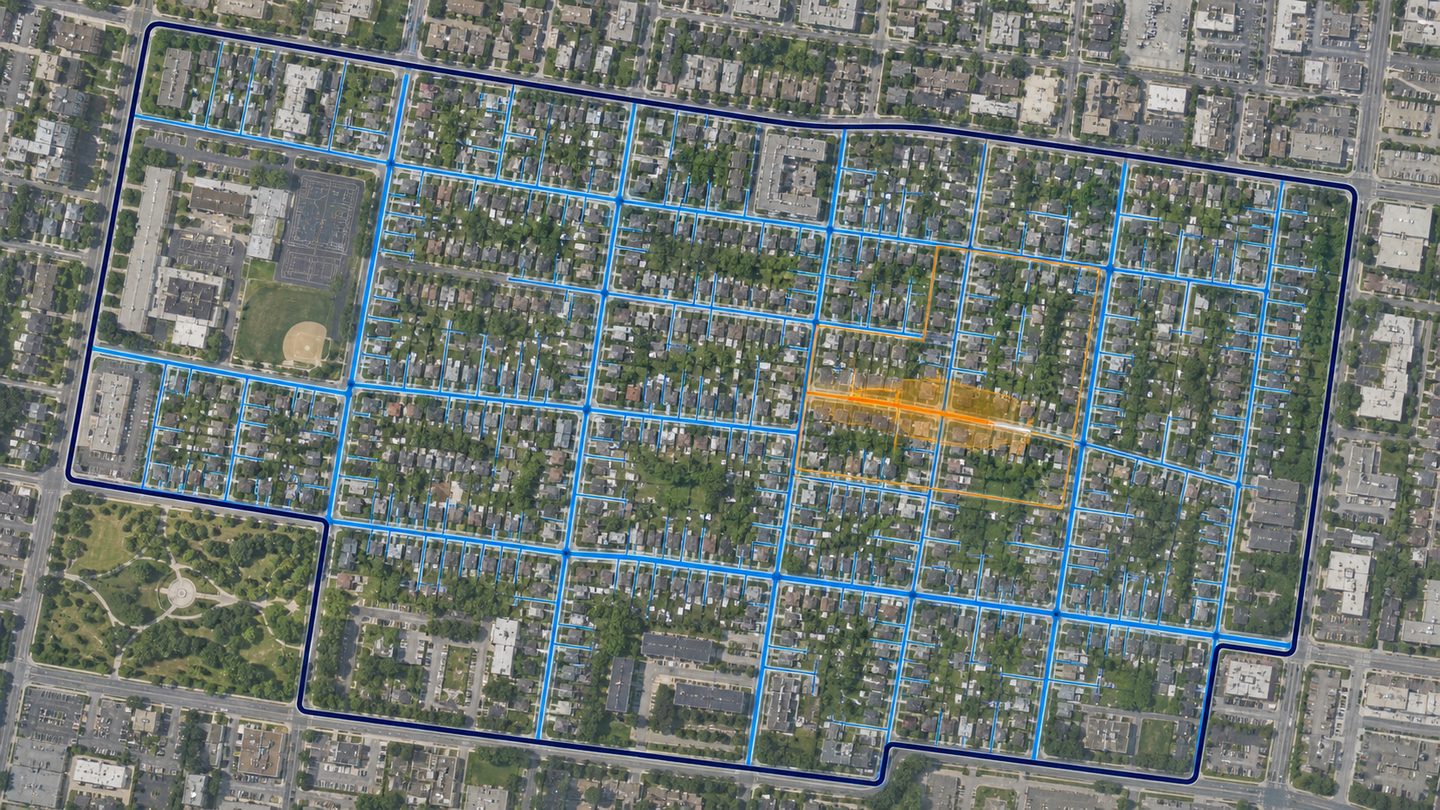
- Inlets and outlets crossing the DMA boundary that are not yet modelled
Let us model your network together
Build your first DMA tree with a pilot zone.
Review your main inlet, subzones and customer clusters with us. We can define the metering boundary and shared calculation-cut-off approach for your existing infrastructure.